Is VCD life threatening?
 Emma Horne
 .
Moreover, is vocal cord dysfunction deadly?
An attack of VCD can be sudden and may be severe. Without treatment, a severe attack may require emergency room treatment. Even if an attack is severe, the oxygen level in your blood is usually normal. VCD symptoms do not usually occur during sleep.
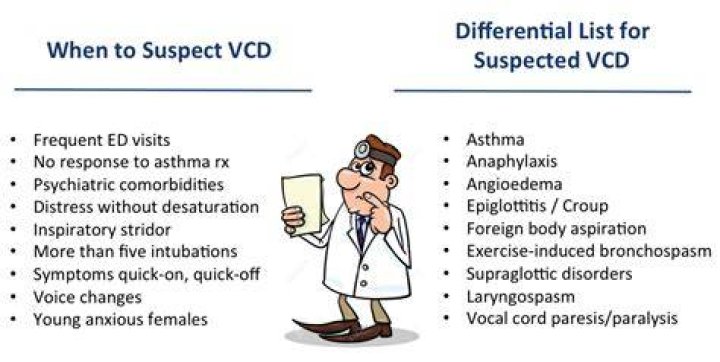
Secondly, how common is VCD? VCD has been found in individuals as young as three and as old as 82. However, in adults it most often occurs between the ages of 20 and 40. In children it appears most often about age 14 or 15. VCD is much more common in females than in males.
Consequently, is there a cure for VCD?
According to a systematic review of psychological interventions for patients with VCD, techniques such as psychotherapy, behavioral therapy, use of anti-anxiety and anti-depressant medications, and hypnotherapy in conjunction with breathing exercises may be effective treatment methods.
What triggers VCD?
Much like with asthma, breathing in lung irritants, exercising, a cold or viral infection, or Gastroesophageal Reflux Disease (GERD) may trigger symptoms of VCD. Unlike asthma, VCD causes more difficulty breathing in than breathing out.
Related Question Answers
Is VCD a disability?
Qualifying for Disability Benefits With a Speech DisorderIf your speech impairment is so severe that it affects your ability to function and maintain a job, you may be able to receive Social Security Disability benefits. You can qualify for Social Security Disability benefits by doing one of two things.Can anxiety cause vocal cord dysfunction?
In one study, 75% of asthmatics were found to also have VCD.2 Female athletes have been found to be especially prone to episodes. Stress and anxiety are both strong contributing factors in triggering episodes. A study comparing teens with VCD and asthma found higher levels of stress and anxiety in the VCD group.Who gets vocal cord dysfunction?
Who Gets Vocal Cord Dysfunction? Most children with vocal cord dysfunction are 6 years of age or older. It happens more often in girls than boys.Can acid reflux cause vocal cord dysfunction?
VCD EtiologyThe cause of VCD may be multifactorial. VCD may be triggered by many factors that also trigger asthma or EIB. The major exacerbating factors include exercise, airborne irritants, postnasal drip (PND), gastroesophageal reflux disease (GERD), laryngopharyngeal reflux (LPR), and certain medications.What is the treatment for vocal cord dysfunction?
Some people have both vocal cord dysfunction and asthma, and require treatment for both conditions. Treatment for vocal cord dysfunction may involve special breathing exercises called panting maneuvers, speech therapy, biofeedback and avoidance of irritants.What does vocal cord dysfunction sound like?
Symptoms of VCDWhen you do have symptoms, most of them are caused by inhaled air moving through a smaller area than usual. They come on suddenly and can mimic an asthma attack. Symptoms for vocal cord dysfunction include: stridor, which is a high-pitched sound during inhalation.Does Albuterol help vocal cord dysfunction?
They often get diagnosed with asthma or exercise-induced asthma, start using an inhaler and begin to feel better. But, sometimes treatment using an albuterol inhaler provides them no relief. Further testing sometimes finds that breathing difficulties came from Vocal Cord Dysfunction (VCD), not Asthma.How do you relax your vocal cord muscles?
Breathing Techniques to Loosen TensionBreathing from your diaphragm helps to release tension on the vocal cords. Breathe in with your stomach instead of your chest to help vocal cords open correctly. It helps to look in the mirror when breathing to make sure the diaphragm is filling up on inhale.How does speech therapy help vocal cord dysfunction?
The mainstays of treatment for vocal cord dysfunction (VCD) involve teaching the patient vocal cord relaxation techniques and breathing exercises. The role of the speech therapist is to effectively teach and communicate a comprehensive speech therapy plan with appropriate breathing exercises.What causes raspy breathing?
The most common causes of recurrent wheezing are asthma and chronic obstructive pulmonary disease (COPD), which both cause narrowing and spasms (bronchospasms) in the small airways of your lungs. However, any inflammation in your throat or larger airways can cause wheezing.Can allergies cause vocal cord dysfunction?
With VCD, the vocal cord muscle tighten, which also makes breathing difficult. VCD is not triggered by allergies or the immune system like asthma. A board-certified allergist/immunologist has specialized training and experience in the diagnosis, treatment and management of complex conditions such as asthma and VCD.How do you warm up vocal chords?
9 best vocal warm-ups for singers- For this quick vocal exercise, simply yawn (take in air) with your mouth closed.
- Humming is one of the best vocal warm-ups because it doesn't put a lot of strain on your vocal cords.
- As far as vocal warm-ups go, lip buzz (or lip trill, as it is sometimes called) is very simple.
Can vocal cord dysfunction cause death?
If the patient exhibiting symptoms of asthma is not responsive to treatment, there is a need to test whether vocal cord dysfunction is complicated by asthma. Although successful cardiopulmonary resuscitation, the patient developed ventilator-associated pneumonia, and multiple organ failure, eventually leading to death.How do you stop a Laryngospasm?
Treatments for laryngospasm- Hold the breath for 5 seconds, then breathe slowly through the nose. Exhale through pursed lips.
- Cut a straw in half. During an attack, seal the lips around the straw and breathe in only through the straw and not the nose.
- Push on a pressure point near the ears.
What causes paradoxical vocal cord dysfunction?
Paradoxical Vocal Fold Motion Disorder (PVFMD)PVFMD is a breathing disorder that is caused by the abnormal movement of the vocal folds during breathing. When the vocal folds close during breathing, instead of open, this blocks the flow of air and causes the patient to feel a severe sensation of trouble breathing.What are signs of damaged vocal cords?
Signs and symptoms of vocal cord paralysis may include:- A breathy quality to the voice.
- Hoarseness.
- Noisy breathing.
- Loss of vocal pitch.
- Choking or coughing while swallowing food, drink or saliva.
- The need to take frequent breaths while speaking.
- Inability to speak loudly.
- Loss of your gag reflex.