What does BBT mean in period?
 Ava Wright
 .
Beside this, how much does BBT drop before period?
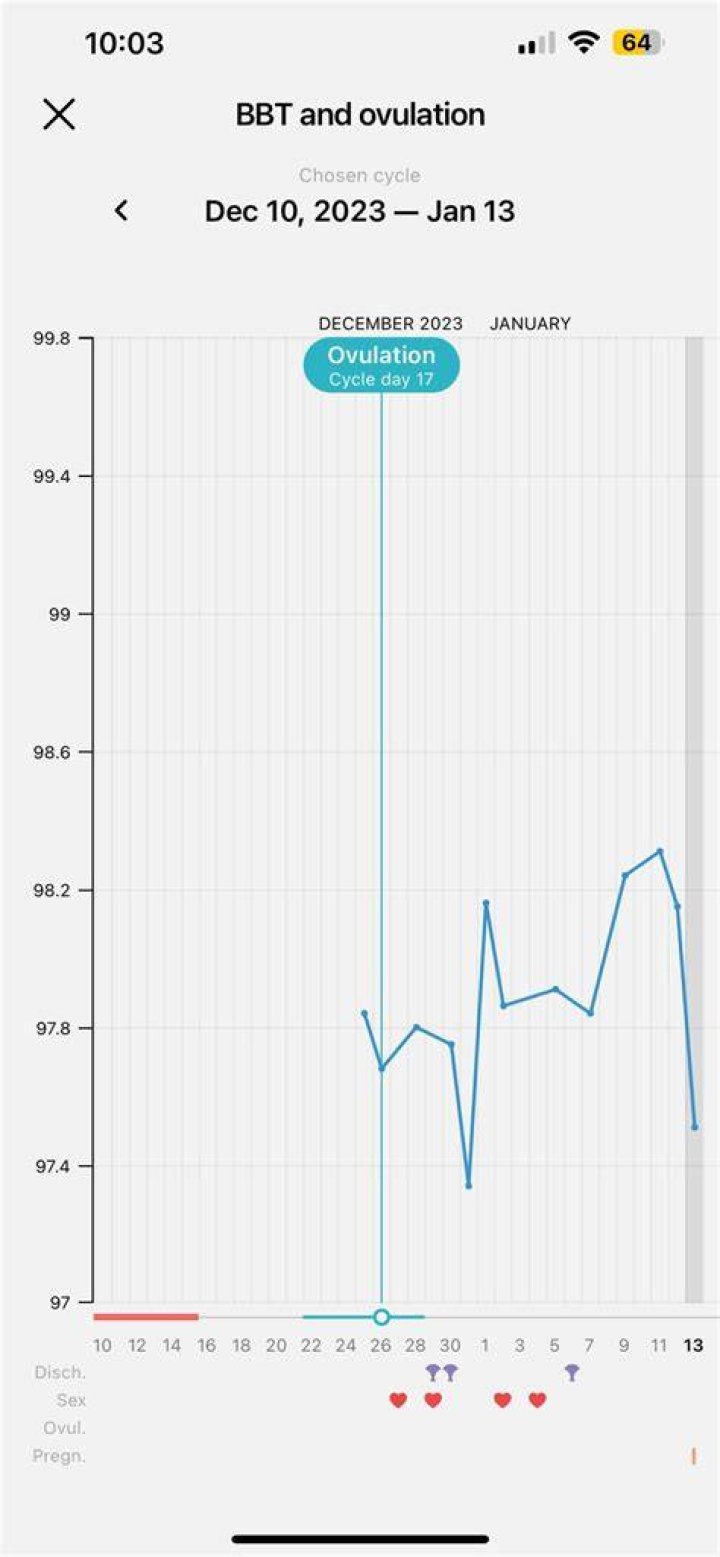
The temperature shift is the rise in your basal body temperature (BBT) from its lower, pre-ovulatory range (usually between 97.0 and 97.7 degrees Fahrenheit, or 36.11 and 36.50 degrees Celsius) to its higher, post-ovulatory range (usually between 97.7 and 98.3 F, or 36.50 and 36.83 C).
Also Know, what does BBT mean? Basal Body Temperature
Keeping this in view, what is a normal basal body temperature?
A: The average range of BBTs is between 97.0-97.7 before ovulation and 97.7-99.0 after ovulation. Ideally, a woman's temperature will not bounce around more than . 5 degrees in the follicular phase and will stay above the coverline during the luteal phase.
What does BBT look like if pregnant?
There are four ways a BBT chart can indicate a pregnancy the possibility of pregnancy. Whether you had sex on your most fertile days: Your basal body temperature can't predict ovulation. Seeing a triphasic pattern on your BBT chart is slightly more likely to indicate a potential pregnancy, but it is also no guarantee.
Related Question Answers
What is your basal body temperature before your period?
Right before ovulation, basal body temperature usually drops, with a sharp increase right after ovulation. In the first phase of the cycle, BBT usually stays below 98.6 °F (37 °C). Most often BBT falls between 97.52–98.24 °F (36.4–36.8 °C) because of low progesterone concentration.What is the basal body temperature in early pregnancy?
Your body temperature dips a bit just before your ovary releases an egg. Then, 24 hours after the egg's release, your temperature rises and stays up for several days. Before ovulation, a woman's BBT averages between97°F (36.1°C) and97.5°F (36.4°C). After ovulation, it rises to97.6°F (36.4°C) to98.6°F (37°C).Does BBT drop below coverline before period?
Your period should not come just seven to 10 days after ovulation, so you wouldn't expect a temperature drop at this time. The dip may just be slightly lower than the rest of your post-ovulation temperatures. Or, it may drop below the coverline on your fertility chart.Does temp drop before period?
The higher level continues through the later half of the cycle, dropping sharply just before menstruation. When pregnancy occurs the basal temperature remains at the postovulatory level through the 1st few months of gestation. It then drops but does not return to the preovulatory level until after delivery.Does low BBT mean not pregnant?
If your temperatures are low throughout the entire luteal phase, or if your luteal phase is less than 10 days, these could be possible signs of low progesterone, which could make it harder to conceive. But a slow rise, absent any other symptoms, does not indicate a fertility problem.How does basal body temp work?
Your basal body temperature is your temperature when you're fully at rest. Ovulation may cause a slight increase in basal body temperature. You'll be most fertile during the two to three days before your temperature rises. By tracking your basal body temperature each day, you may be able to predict when you'll ovulate.Does BBT stay high if pregnant?
Waking or Basal Body Temperature (BBT)After ovulation, your temperature usually remains elevated until your next period, about two weeks later. But if you become pregnant, it remains high for more than 18 days.What is high basal body temperature?
Basal body temperature (BBT or BTP) is the lowest body temperature attained during rest (usually during sleep). This will lead to a somewhat higher value than the true BBT. In women, ovulation causes a sustained increase of at least 0.2 °C (0.4 °F) in BBT. Monitoring BBTs is one way of estimating the day of ovulation.What is the normal body temp?
The average normal body temperature is generally accepted as 98.6°F (37°C). Some studies have shown that the "normal" body temperature can have a wide range, from 97°F (36.1°C) to 99°F (37.2°C). A temperature over 100.4°F (38°C) most often means you have a fever caused by an infection or illness.Does pregnancy raise body temperature?
This extra blood flow boosts body metabolism by about 20%, creating more body heat and making pregnant women less likely to feel the cold. A pregnant woman's core body temperature will often rise to about 37.8°C, when it is normally 37°C. It is not uncommon to feel a bit light-headed during pregnancy.What is considered a low BBT?
If you track your BBT, you'll probably see the term “biphasic pattern” come up. This refers to the fact that body temperature is lower before ovulation, and then it rises after ovulation. During this phase, body temperature is low, typically around 34.5 – 35.9°C / 94.1 – 96.6°F.Does BBT rise during period?
BBT is slightly lower in the follicular phase (the first half of the menstrual cycle), and rises after ovulation and stays raised throughout the luteal phase (the second half of the menstrual cycle) (2,3). This rise in temperature happens in response to progesterone, which is released after ovulation occurs.How do you confirm ovulation?
There are several ways to detect ovulation, including urine test kits to measure LH levels, transvaginal ultrasound, endometrial biopsy, blood tests to measure hormone levels, and the basal body temperature (BBT) chart.How do you know ovulated?
Ovulation is when an egg is released from one of your ovaries. your cervical mucus – you may notice wetter, clearer and more slippery mucus around the time of ovulation. your body temperature – there's a small rise in body temperature after ovulation takes place, which you may be able to detect with a thermometer.Does alcohol affect BBT?
The following factors may influence your BBT: Fever, illness, or infection (e.g. sore throat, cold, flu) Alcohol consumption (especially in large quantities) Medications and drugs.How do you chart fertility?
As part of charting, you'll need to:- Test to find out when you are ovulating.
- Take your "basal body temperature" -- your temperature when you're at rest.
- Examine your cervical mucus.
- Track when your menstrual period begins.
- Note when you have sex.