Does heart rate change with age?
 Daniel Foster
 .
Consequently, how does age affect heart rate?
As people age, the heart tends to enlarge slightly, developing thicker walls and slightly larger chambers. The increase in size is mainly due to an increase in the size of individual heart muscle cells. Also, during exercise, older people's heart rate does not increase as much as in younger people.
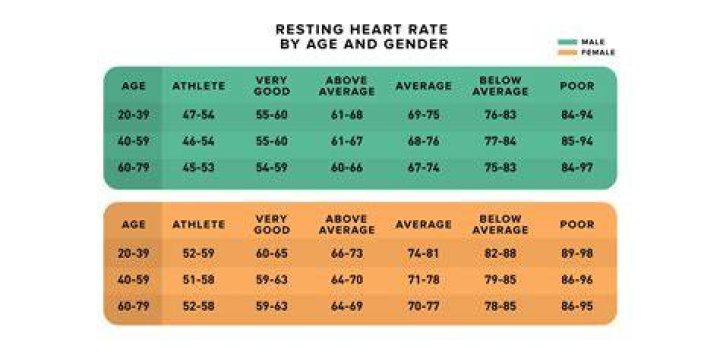
Furthermore, what is a good heart rate for my age? The normal resting heart rate for adults over the age of 10 years, including older adults, is between 60 and 100 beats per minute (bpm). Highly trained athletes may have a resting heart rate below 60 bpm, sometimes reaching 40 bpm. The resting heart rate can vary within this normal range.
Considering this, does maximum heart rate change with age?
Everybody knows that aerobic capacity decreases with age. It's because older hearts simply can't beat as fast as younger hearts. So the older person who's doing 120 beats per minute is probably working harder -- at a higher percentage of maximum heart rate -- than the younger person who is at 150 beats per minute.
What happens to the heart as it ages?
As you age, so do your blood vessels. They become less flexible, making it harder for blood to move through them easily. Fatty deposits called plaques also collect along your artery walls and slow the blood flow from the heart.
Related Question Answers
What is a good resting heart rate by age?
The normal resting heart rate for adults over the age of 10 years, including older adults, is between 60 and 100 beats per minute (bpm). Highly trained athletes may have a resting heart rate below 60 bpm, sometimes reaching 40 bpm. The resting heart rate can vary within this normal range.Can you have a heart attack with normal blood pressure and pulse?
Blood pressure is not an accurate predictor of a heart attack. Sometimes a heart attack can cause an increase or decrease in blood pressure, but having a change in blood pressure reading doesn't always mean it's heart-related. Chest pain is the most common symptom of a heart attack. However, it's not the only symptom.Does your heart get bigger as you get older?
As people age, the heart tends to enlarge slightly, developing thicker walls and slightly larger chambers. The increase in size is mainly due to an increase in the size of individual heart muscle cells. Also, during exercise, older people's heart rate does not increase as much as in younger people.How can I strengthen my heart naturally?
7 powerful ways you can strengthen your heart- Get moving. Your heart is a muscle and, as with any muscle, exercise is what strengthens it.
- Quit smoking. Quitting smoking is tough.
- Lose weight. Losing weight is more than just diet and exercise.
- Eat heart-healthy foods.
- Don't forget the chocolate.
- Don't overeat.
- Don't stress.
What are the 4 silent signs of a heart attack?
The good news is that you can prepare by knowing these 4 silent signs of a heart attack.- Chest Pain, Pressure, Fullness, or Discomfort.
- Discomfort in other areas of your body.
- Difficulty breathing and dizziness.
- Nausea and cold sweats.
- Know The Signs — And Don't Ignore Them.
How can I check if my arteries are clogged?
Are there tests for clogged arteries?- Cholesterol screening.
- Chest X-ray.
- CT scan.
- Ultrasound.
- Echocardiogram and/or cardiac stress test.
- Electrocardiogram.
- MRI or PET scanning.
- Angiogram.
What affects heart rate?
The American Heart Association says factors that may influence heart rate include: High temperatures and humidity, which can increase heart rate. For example, beta blockers commonly taken by cardiac patients may decrease heart rate, while thyroid medications may increase it.What are the early signs of heart disease?
Heart disease symptoms caused by abnormal heartbeats (heart arrhythmias)- Fluttering in your chest.
- Racing heartbeat (tachycardia)
- Slow heartbeat (bradycardia)
- Chest pain or discomfort.
- Shortness of breath.
- Lightheadedness.
- Dizziness.
- Fainting (syncope) or near fainting.